Stop 01 · Footwear Materials
Suede Isn't Fragile. You've Just Been Told It Is.
Suede is the same cowhide as smooth leather with the nap turned out, and with a $15 spray and a $10 brush it handles far more weather than its reputation suggests.
By Marcus Hale, Footwear Editor
· 8 min read · 1,664 words
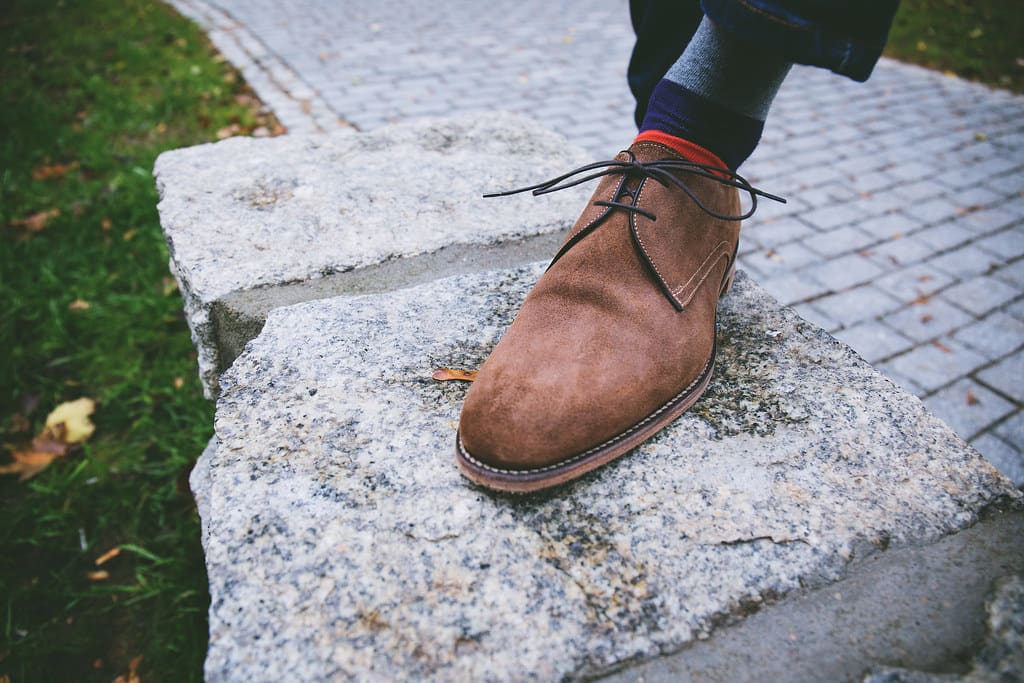
Can suede get wet? That was the suede question I heard most on the shop floor, three or four times a week every fall. Men would turn a suede chukka over in their hands like a pastry. They’d ask about rain, then snow, then whether they should save it for special occasions.
Somebody had told them suede was fragile. It isn’t. Suede is the same cowhide as smooth leather, split and brushed on the flesh side, and with a $15 protector spray and a $10 brush it handles more weather than most men will ever put it through.
So yes, suede can get wet. Treated suede shrugs off drizzle, wet grass and a short walk in steady rain, and even soaked suede usually recovers if you dry it slowly at room temperature and brush the nap back up. What it can’t take is a long soak followed by a radiator, or road salt left to dry on it.
Suede is leather turned inside out
Most smooth leather is the grain side of the hide, the outer surface where the hair grew. Suede comes from the inside, the flesh side, usually from a split layer of the hide that’s been sanded and brushed until the fibers stand up into a soft nap. Same animal, same tanning. The only real difference is which surface faces the world.
That nap is why suede looks delicate. It shows marks and changes color when you rub it the wrong way, and it darkens when wet. But showing a mark and being damaged are two different things. Smooth leather that gets scratched keeps the scratch. Suede that gets scuffed usually brushes back out, because there’s no finished surface to break. I’d go further and say a good suede forgives daily abuse better than polished calf. Calf cracks at the flex point if you neglect it. Suede creases too, but the nap hides it.
Where suede does lose is staining. Oil and red wine soak into the open fibers fast. Water doesn’t stain on its own; what stains is whatever the water carries in, like mud and city grime.
Color matters more than people think. Dark brown and gray suede hide water marks and dirt for weeks. Pale sand and tan show everything but age beautifully, going a little darker and more uneven every season. If you want one suede shoe for city wear, say the chukka slot in a four-shoe rotation, buy it a shade darker than the one you like in the store.
Suede can get wet, and it dries back fine
I’ve worn suede chukkas through more October rain than I’d like to admit, partly to prove the point to myself. What I learned is simple.
Treated suede in light rain beads water for the first 10 to 15 minutes, then slowly darkens as the water works in. Get home, stuff the shoes with newspaper or put cedar trees in, and leave them at room temperature overnight. In the morning they’re lighter in color, and the nap is flat and a little stiff. Brush them in one direction for a minute, then against the grain, and the nap comes back. Nine times out of ten you can’t tell they were wet.
The tenth time is usually tide lines, a pale ring where the wet part met the dry part. Fix it by evening things out. Dampen the whole shoe with a sponge and plain water so it dries uniformly, then brush again. It sounds backward. It works.
What kills suede is heat. A radiator or a hair dryer will shrink the leather and leave the nap brittle. I learned this the stupid way, with a pair I needed for the next morning. They came out of the night half a size smaller and stiff as cardboard, and no amount of brushing brought them back.
Dry snow is easier than rain. Cold, powdery snow brushes off before it melts, so knock your feet on the doormat, brush the toes when you get inside, and the suede barely notices. Wet, heavy snow behaves like rain and gets the same treatment. The trouble only starts when the snow is mixed with salt, which comes later.
| Situation | What treated suede does | What to do |
|---|---|---|
| Light drizzle, 20 minutes | Beads, then darkens slightly | Air dry, brush |
| Steady rain, 1 hour | Darkens, may spot | Trees, dry overnight, brush |
| Soaked through | Dark, flat nap | Newspaper, 24–48 hours, brush, re-spray |
| Salted slush | White rings as it dries | Damp cloth with diluted vinegar, brush |
| Dried with heat | Shrinks and hardens | Don’t |
A $15 spray does most of the work
Suede protector is a spray that coats each fiber so water beads instead of soaking in. A good one barely changes the color, and it won’t stiffen the nap if you apply it right.
Brush the new shoe to lift the nap, then spray from about 6 inches away in light, even passes and let it dry for 24 hours before wearing. Do a second coat if you live somewhere wet. Re-spray every two to three months in the wet season, and after any time the shoes got soaked. A can runs about $15 and treats four or five pairs a season.
For years I told customers one coat at the register was enough. It isn’t, at least not in a wet city. The first coat soaks into the nap unevenly, and the second fills the gaps. Since I switched to two coats on my own pairs, the dark spotting after a rainy walk has mostly stopped.
Half the ruined suede I saw had never been sprayed, and the other half had spent a night on a radiator.
Brushes matter more than people expect. A brass-and-nylon suede brush runs about $10 and does most of the work: dry mud flicks off once it’s fully dry, and a minute of brushing revives a nap that’s gone flat and shiny at the toe. For dry scuffs and matted spots, a suede eraser or a crepe block, a slab of raw rubber, lifts the dirt out of the fibers. About $25 of tools covers years of care.
Fresh oil is the one stain worth acting on fast. Blot it, don’t rub, then cover the spot with cornstarch and leave it overnight so the powder pulls the oil out. Brush it off in the morning. A fresh grease spot usually comes out most of the way. A week-old one won’t.
The chukka that makes the case
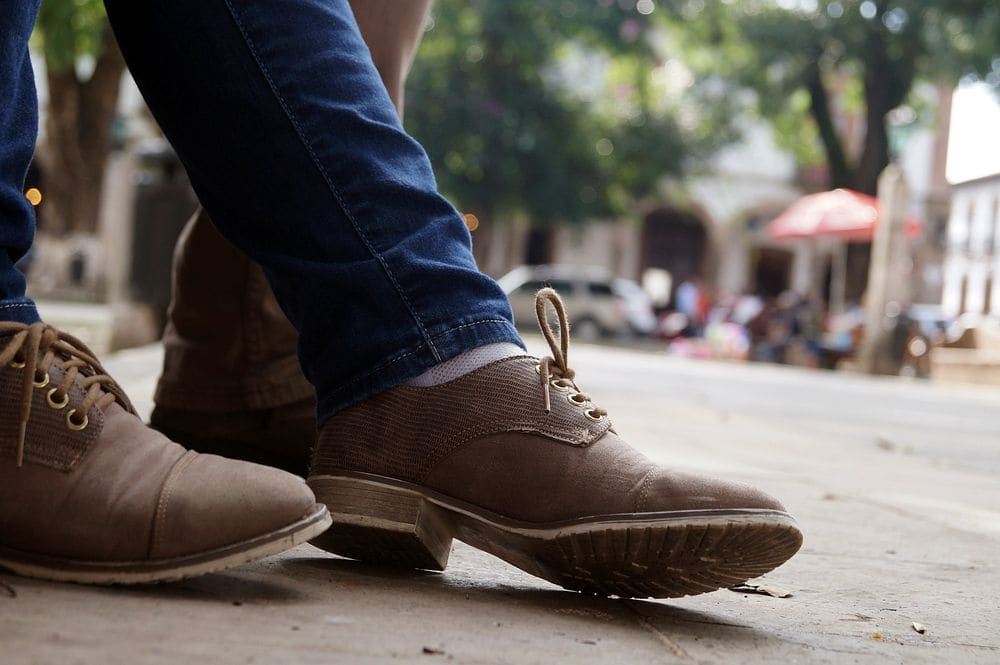
The Clarks Originals Desert Boot, $160, is the suede shoe I’ve sold most and the one I recommend first. It’s a two-eyelet chukka on a crepe sole, soft from day one, and the easiest way I know to dress up chinos or dress down a sport coat. If you’re not sure whether your jacket counts as a sport coat or a blazer, the Desert Boot sits better with the rougher, more textured one.
The limitations are honest ones. The crepe sole wears quickly on concrete, often thinning noticeably within a year of regular city wear, and it picks up grit. Small stones and bits of glass embed in it, and on a dirty sidewalk the sole goes from honey to gray in a week. Untreated suede is no match for a downpour either, which is the whole reason for the spray. Treated, it’ll get you through an October shower. Untreated, twenty minutes of hard rain will soak through to your socks.
Crepe also goes slick on wet leaves and polished floors. If grip in rain matters to you, the sole is a bigger problem than the suede, and my notes on which soles grip in the rain cover that trade. A cobbler can resole a Desert Boot in crepe or swap it to rubber, usually for $60 to $90, though at $160 for a new pair it’s a close call.
Fit runs close to true size, and the suede gives a little in the first week. The tan color fades and darkens unevenly over a few seasons. That’s the look you’re paying for, so don’t fight it.
Where suede really is the wrong choice
I won’t pretend suede handles everything. A few conditions beat it.
Deep, salted slush is the worst. Salt water soaks into the nap and dries into white rings, and repeated salting dries out the leather underneath. A week of February in a snowbelt city does more damage than a whole fall of rain. Those weeks call for oiled leather or rubber boots.
Grease is next. Kitchen floors and garage floors will put oil into the nap, and old oil stains are permanent.
Long hours in wet grass are the last, for a different reason. Hours of soaking push water past even a good treatment, and the shoe can lose its shape as it dries. Wear rubber to the outdoor wedding on a soggy lawn.
Outside of those, suede is a sensible, hard-wearing choice for most of the year. It’s the right texture for layering in fall, when flannel and tweed want a shoe with some surface to it. It also sidesteps most of the belt-and-shoe matching worry, because a brown suede shoe sits fine with a smooth brown belt and nobody checks whether the textures agree.
When men ask me which shoe to buy first when they’re building a closet from scratch, I say the suede chukka, because it covers more days per dollar than anything else. There are more footwear guides on fit and soles for the rest of the closet.
The verdict: Buy the Desert Boot, or whatever suede you like, spray it twice before the first wear, re-spray every two or three months in wet seasons, and keep a $10 brush by the door. Wear it in drizzle without a second thought. Skip it on salted slush days and in a real downpour, and never dry it with heat. Treated like that, a $160 suede chukka will outlast the smooth leather shoes of men who are afraid of it.
In this story
How we make money: some links below are affiliate links. If you buy through them, Via may earn a commission. It never changes the price you pay, and it never decides what we recommend. Full disclosure.
Mid · $100–$299
Clarks Originals Desert Boot
The two-eyelet suede chukka on a crepe sole: light, soft from day one, and the easiest way to dress up chinos or dress down a sport coat.
Won't do: The crepe sole wears quickly on concrete and picks up grit, and untreated suede is no match for a downpour.
Next stops
All Footwear guides
The Four-Shoe Rotation That Covers Most of a Year
An oxford, a white sneaker, a suede chukka and a penny loafer: four pairs, about $1,200, and almost nothing on the calendar they can't handle.
Marcus Hale 8 min
Leather Soles vs. Rubber Soles: A Commuter's Verdict
Leather looks better and breathes better, rubber grips better and lasts longer, and a $50 fix from a cobbler lets a daily commuter have most of both.
Marcus Hale 6 min
When to Resole: Reading the Wear on Your Soles
Your soles keep a record of every mile. Learn to read it, and you'll resole at the right moment instead of paying to rebuild a ruined shoe.
Walt Brennan 8 min