Stop 05 · Tailoring Buying Guide
Why Your First Suit Should Be Navy, Not Charcoal
Charcoal is the more serious color, but a first suit has to cover daytime weddings, interviews, and brown shoes, and navy covers more of them.
By Julian Okafor, Tailoring Editor
· 8 min read · 1,848 words
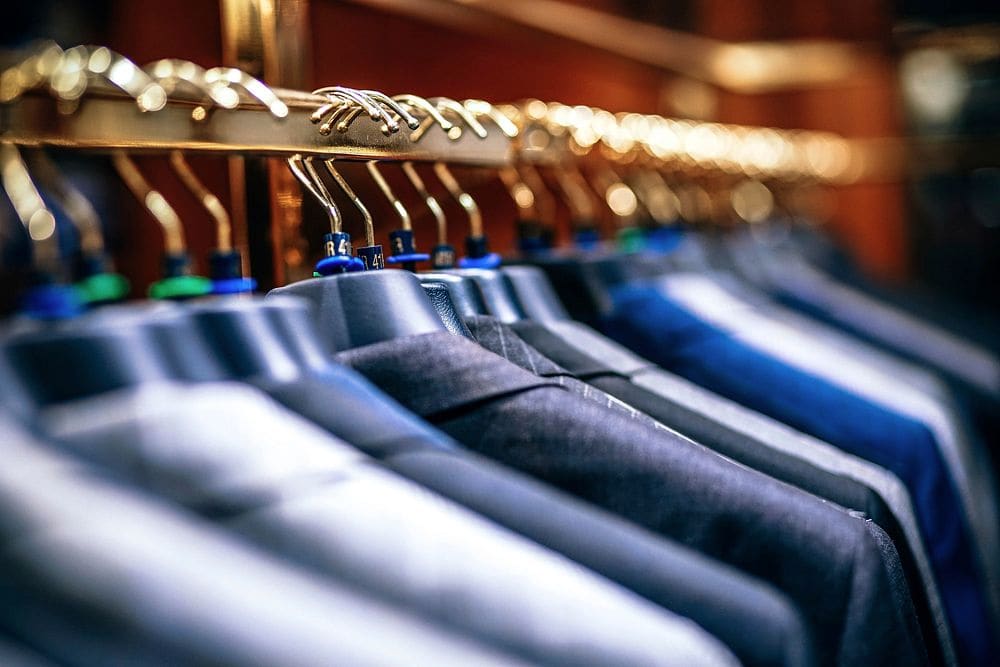
Charcoal is the more serious color, and it’s probably the better color for a man who already owns a couple of suits. Buy navy first anyway. I say that as someone whose own first suit was charcoal, bought in a hurry for a funeral, and who then spent two summers wearing it to weddings looking as though he’d come straight from one.
If you’re weighing a navy vs charcoal suit as your first, choose navy. It covers more of the occasions a first suit actually gets worn to, it takes both black and brown shoes, and in a textured cloth the jacket can even pass on its own. Charcoal makes the better second suit.
The longer answer has to do with daylight, with what each color does to your face, and with how many shirts, ties, and shoes each one tolerates before something looks off. Navy wins most of those rounds. The one it loses is a room you’ll walk into less often than you think.
Navy covers more of your calendar
Write down the last ten times you needed a suit, or will soon. For most men between 25 and 45 the list looks roughly like this: two or three weddings, a job interview, a few client meetings, a holiday party, a good dinner, and, if the year is unkind, a funeral. A first suit has to cover all of it, because there isn’t a second one yet.
Navy handles that list better than any other color. It’s dark enough to read as formal after 6 p.m. and in a church, but it has enough color in it to look right outdoors at a 2 p.m. wedding in June, which is exactly where charcoal looks like it took a wrong turn. Charcoal in strong daylight reads flat and a little somber. In a dim restaurant it’s superb. Most of the suit occasions in your life, though, happen in daylight or under office fluorescents, and navy looks intentional under both.
It also suits more faces. Navy has a blue cast that puts a little color back into your skin; charcoal, a gray with some black in it, tends to drain it. I notice this most on fair-skinned men in February and on anyone who’s slept badly, which, at a 9 a.m. interview, is everyone.
Not every navy does this, mind you. The shade you want is a true, deep navy, dark enough to read almost black in a dim room. Avoid the brighter, royal-leaning blues that show up on sale racks every spring; they date within a couple of years and look loud at anything solemn. Before you buy, carry the jacket to the store’s front door and look at it in daylight. Fluorescent tubes flatter bright blues and flatten dark ones, and I’ve watched more than one man discover at the door that his navy was closer to cobalt.
If you’re dressing for a specific invitation, the wedding guest dress codes on cocktail, semi-formal, and garden attire are worth a look, but a well-fitted navy suit clears every one of them short of black tie.
Navy vs charcoal suit, occasion by occasion
Put the two colors through the same list and the pattern is plain. They tie at the formal end, charcoal edges ahead at the most somber end, and navy wins everywhere the sun is out.
| Occasion | Navy | Charcoal |
|---|---|---|
| Job interview | Right | Right |
| Daytime wedding | Right | Too somber |
| Evening wedding | Right | Right |
| Funeral | Acceptable | Right |
| Jacket worn alone | Sometimes | Rarely |
| Medium-brown shoes | Easy | Awkward |
The jacket row needs a caveat, because it’s where men overestimate a suit. A smooth, slightly shiny navy worsted suit jacket worn with gray trousers looks like what it is, half of a suit that lost its other half. The cloth gives it away. A navy suit in a matte or textured weave, such as hopsack or a dry, slightly open worsted, carries the trick much better, and that’s one more reason I steer first-time buyers toward those cloths. The full set of tells, from buttons to cloth, sits in our piece on the sport coat and blazer difference. A charcoal suit jacket worn alone almost never works. It just looks like you forgot your trousers somewhere.
The interview row deserves a word too. Both colors are correct, and nobody has ever lost a job over the difference. What can cost you is fit, and a navy suit with a correct shoulder and a clean trouser hem will beat a charcoal one that’s a size too big every time.
Charcoal is a better second suit than a first
I don’t dislike charcoal. It’s the most formal color short of black, it hides wear and the occasional coffee splash better than navy, and in a heavier flannel it’s the best-looking thing a man can wear in December. If your job puts you in a suit three days a week, especially in law or finance, a charcoal suit will earn its keep fast.
And at a funeral it’s the right choice. Navy is acceptable at nearly all of them, and the exceptions are covered in our guide to funeral attire for men, but charcoal reads as respectful without anyone having to think about it.
Charcoal is the suit you buy once you already own a navy one.
The order matters because a first suit has to be the generalist and a second suit can afford to specialize. Buy charcoal first and you’ll own a suit that’s perfect for a third of your occasions and slightly wrong for another third. Buy navy first and the worst case is “fine.” Then add charcoal, and between the two you’ll be covered for the next decade.
One color I’d talk you out of entirely is black. A black suit is evening wear and a uniform for waiters and pallbearers. In daylight it looks harsh, it shows every speck of lint, and it narrows your shoe choice to black alone. Men buy black because it feels safe, and it’s the least safe color on the rack.
Medium gray is a separate case, and a good one. It’s a daytime color, friendly with brown shoes and easy in summer, but it’s too light for evening and too casual for a funeral, so it fails the generalist test at both ends. I’d make it a third suit, after navy and charcoal, if you get that far.
Navy forgives the wrong shoes
Shoes are where navy pulls furthest ahead. A navy suit takes black, dark brown, medium brown, and burgundy, and all four look deliberate. Charcoal takes black and burgundy easily and dark brown with some care, but a medium brown against charcoal tends to look like you got dressed in the dark. If you already own one good pair of brown shoes and no black ones, navy is the suit that lets you wear them.
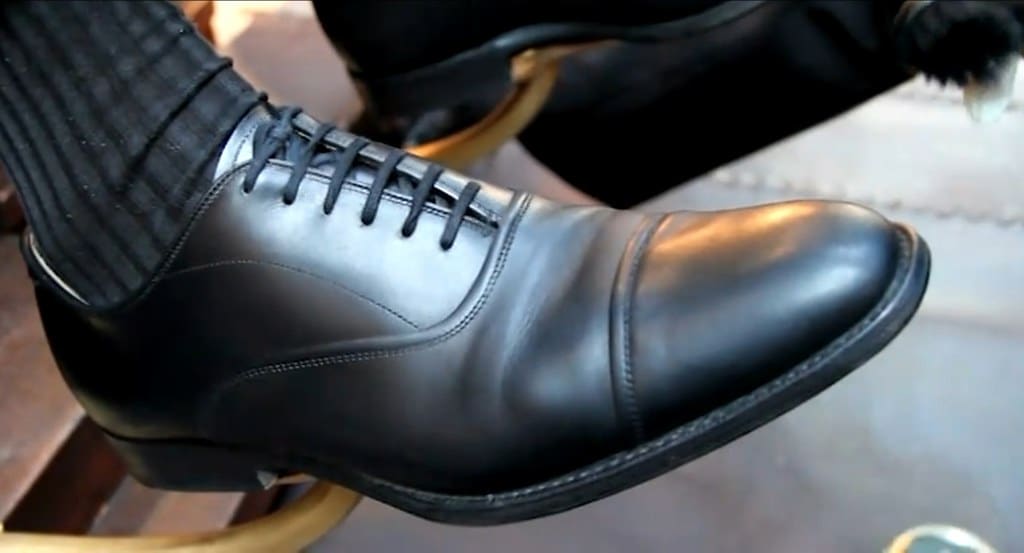
If you’re buying one pair of dress shoes alongside the suit, make it a cap-toe oxford in black or dark brown. The Allen Edmonds Park Avenue Cap-Toe Oxford ($425) is the one I’d point you to: Goodyear-welted calfskin, a closed lacing that sits clean under suit trousers, and the maker will recraft it when the sole is done, so the $425 gets spread over many years. Know its limits before you pay. It’s too formal for jeans or chinos, so don’t count it as an everyday shoe, and the leather sole is slick on wet pavement for the first few weeks. In dark brown it works with navy at a daytime wedding and still passes at an evening one. In black it works with both suit colors anywhere.
Ties follow the same pattern. Navy takes nearly any color you’d wear, from burgundy to green to brown knit, and a solid navy suit gives a patterned tie room to work. Charcoal is happier with fewer, quieter choices. Width matters more than color, though, and the rules on tie width and knots apply whichever suit you choose.
Ten ounces, two buttons, no pattern
Color is only the first decision, and the rest are easier because a first suit should be plain. Solid navy, no stripe, no check. You’ll be remembered for a chalk stripe, which is the opposite of what a suit you’ll wear 15 times a year should do.
| Spec | What to ask for |
|---|---|
| Cloth weight | 9 to 11 ounces |
| Wool grade | Super 110s to 130s |
| Cut | Two-button, single-breasted |
| Lapel width | 3 to 3 1/2 inches |
| Trouser leg opening | 7 1/2 to 8 inches |
| Budget with alterations | $500 to $900 |
That weight range is the year-round middle. Lighter cloth wrinkles and wears faster, heavier cloth is miserable in July, and the details of each are in our guide to suit fabric weights. Don’t chase a high Super number either. Super 150s feels lovely in the store and shines at the seat within a couple of years of regular wear; 110s to 130s is the durable sweet spot.
A few construction details are worth asking about while the salesman is still being friendly. Double vents at the back let the jacket sit flat when you put your hands in your trouser pockets, and they flatter most builds more than a single center vent does. A half-canvassed chest will hold its shape through years of dry-cleaning better than a fully fused one, and it usually adds $100 to $200 to the price. Flat-front trousers or a single shallow pleat both work; what matters is a rise that sits at your natural waist, not on your hips. And if the trousers come unhemmed, good. That’s a store that expects you to see a tailor.
Then wear it properly. Wool needs about 24 hours on a broad hanger to let its creases fall out, so don’t wear the suit two days running if you can avoid it, and brush it after each wear instead of sending it to the cleaner. Two or three trips to the dry cleaner a year is plenty for a suit worn twice a month.
Budget the alterations into the price before you shop. Most first suits need $60 to $150 of work: sleeves, waist, and a trouser hem. If a suit costs $600 and needs $100 of tailoring, it’s a $700 suit, and that’s a sensible number for something you’ll wear for six or eight years. More on fit and what a tailor can and can’t fix lives in our tailoring guides.
I was wrong about one thing for a long time: I used to tell people to buy the first suit as cheaply as possible and spend properly on the second. I don’t anymore. The first suit gets worn the most, because it’s the only one, and a $250 suit in fused polyester-blend cloth looks tired by the third wedding.
The verdict: Make your first suit a solid navy, two-button, single-breasted suit in 9- to 11-ounce wool at Super 110s to 130s, and budget $500 to $900 including alterations. Wear it with a dark brown or black cap-toe oxford, and buy charcoal second, once you know whether your year runs more to boardrooms or backyards.
In this story
How we make money: some links below are affiliate links. If you buy through them, Via may earn a commission. It never changes the price you pay, and it never decides what we recommend. Full disclosure.
Investment · $300+
Allen Edmonds Park Avenue Cap-Toe Oxford
A Goodyear-welted calfskin cap-toe oxford with a closed lacing that sits clean under suit trousers and can be recrafted by the maker when the sole is done.
Won't do: Too formal for jeans or chinos, and the leather sole is slick on wet pavement for the first few weeks.
Next stops
All Tailoring guides
Suit Fabric Weights: Ounces, Seasons, and Wrinkles
The weight of the cloth decides when you can wear a suit, how it hangs, and whether it looks slept-in by lunch, so learn the numbers before you shop.
Julian Okafor 7 min
Sport Coat or Blazer? The Difference Is in the Details
Buttons, cloth, and pockets separate a blazer from a sport coat, and knowing which is which tells you what to wear it with.
Julian Okafor 8 min

Wedding Guest Dress Codes, Decoded for Men
From black tie to beach, here is what each line on the invitation actually asks of you, planned the Via way: shoes first, then everything above them.
Sam Whitaker 9 min