Stop 06 · Field Guides Occasion Guide
Wedding Guest Dress Codes, Decoded for Men
From black tie to beach, here is what each line on the invitation actually asks of you, planned the Via way: shoes first, then everything above them.
By Sam Whitaker, Field Guides Editor
· 9 min read · 1,901 words
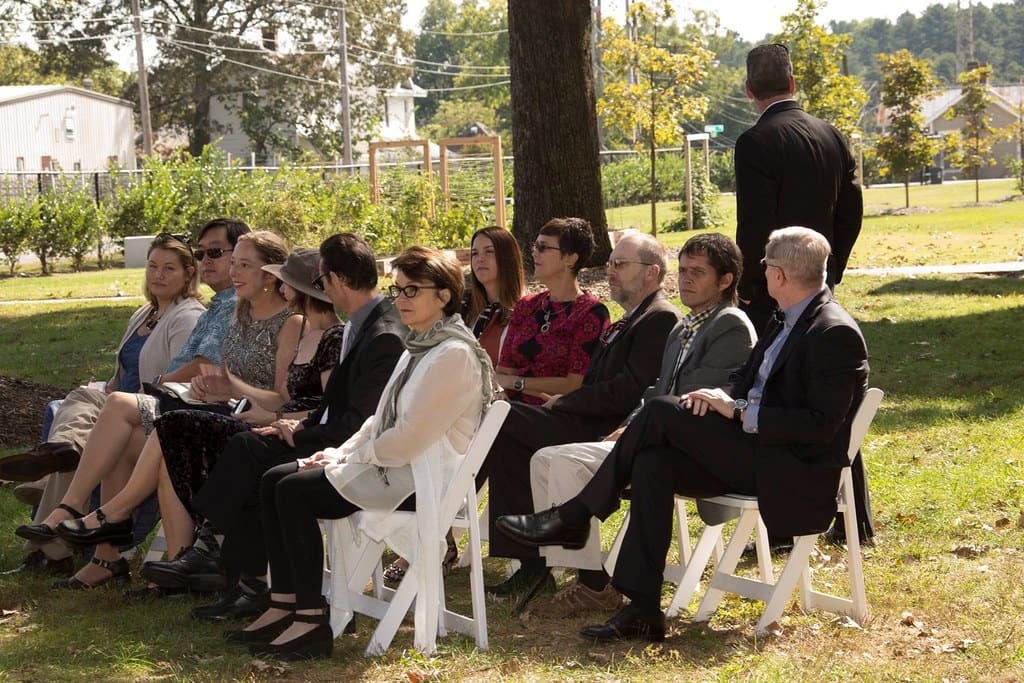
The invitation is on your fridge, held up by a magnet, and one line under the date has been bothering you for a week. “Black tie optional.” “Garden formal.” “Festive attire.” You know what a suit is. You’re less sure what the couple means by it, and you’d rather not be the man in the group photo who guessed wrong.
A wedding guest dress code is shorthand, and once you know the shorthand it reads easily. The short version: black tie means a tuxedo and black shoes; black tie optional means a tuxedo or a dark suit and tie; formal and cocktail mean a dark suit and tie; semi-formal allows a lighter suit; dressy casual swaps the matching suit for a jacket and trousers; beach means linen and loafers. If in doubt, wear a navy suit, a white shirt, a dark tie and black oxfords.
I plan for a wedding the way I’d plan a trip. I check the start time and look up photos of the venue. Then I build from the shoes up, because the shoe tells everyone which line of the invitation you read, and it’s the one thing you can’t fix once you’ve arrived. A tie comes off. A jacket goes over a chair. The shoes stay on until the last song.
Every wedding guest dress code is a range
Each dress code describes a band, not a point. “Cocktail” covers everything from a dark suit and tie to a sharp sport coat with an open collar, depending on the couple and the hour. Your job isn’t to hit the top of the band or sneak in at the bottom. It’s to land in the middle, where you look like you took the day seriously without competing with the groom.
Two rules get you most of the way. The later the start, the more formal the evening: a 6 p.m. ceremony asks more of you than a noon one, even under identical wording. And the venue sets the rules for your feet. A ballroom, a church aisle, a lawn and a beach are four different shoe problems, so spend two minutes on the venue’s website before you decide anything.
| Invitation says | Shoes | Above the ankle | Tie? |
|---|---|---|---|
| Black tie | Black patent or polished oxford | Tuxedo, white dress shirt | Black bow tie |
| Black tie optional | Black cap-toe oxford | Tuxedo or dark suit | Yes |
| Formal / cocktail | Black or dark brown oxford | Navy or charcoal suit | Yes |
| Semi-formal | Dark brown oxford or loafer | Suit, lighter colors allowed | Usually |
| Dressy casual / garden | Penny loafer or suede chukka | Odd jacket and trousers | Optional |
| Beach / casual | Loafer, no socks | Linen suit, or shirt and trousers | No |
Black tie starts at the floor
Black tie is the one dress code with a real rulebook, and rulebooks are restful. Tuxedo, white dress shirt, black bow tie, black shoes. The traditional shoe is patent leather or a plain-toe oxford polished to a mirror. Most men don’t own patent shoes and I wouldn’t buy them for one wedding. A black calfskin cap-toe oxford with a high shine on the toe and heel has passed in every ballroom I’ve walked into.
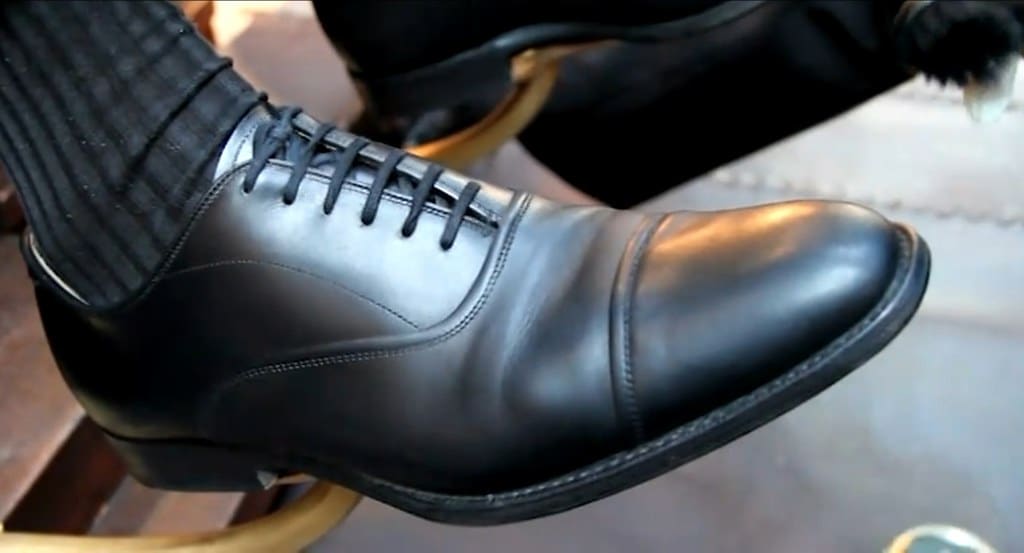
That’s where the Allen Edmonds Park Avenue earns its $425. It’s a Goodyear-welted calfskin cap-toe oxford with closed lacing (the facings are stitched under the vamp, so the shoe sits narrow and clean under a trouser hem), and when the leather sole wears through, the maker can recraft it instead of you replacing the pair. In black, it’s the shoe I’d tell any man to buy first if he expects more than two formal events in the next decade. It handles everything from black tie down to formal, and it’s the right shoe for a funeral, where nothing should stand out.
Its limits are real. It’s too formal for jeans or chinos, so it won’t earn its keep on weekends. And the leather sole is slick on wet pavement for the first few weeks, which matters at a wedding, where church aisles are polished and hotel lobbies are marble. Wear the shoes at least three times in the two weeks before, on sidewalks, so the sole scuffs and starts to grip. If you’re down to a few days, a cobbler will rough up the sole or glue on a thin rubber half-sole for $30–$50 (the trade-off between leather and rubber soles is worth understanding before you pay for it).
“Black tie optional” gives you a real choice. If you own a tuxedo, or are happy to rent one (typically $150–$250, shoes not included), wear it; you won’t be overdressed. If not, a navy or charcoal suit with a white shirt, a dark solid tie and the same black oxfords is exactly what the phrase was written for. I once wore dark brown oxfords to a 7 p.m. black tie optional reception because I thought they looked warmer. In every photo they look like I came straight from the office. Black is the one thing the evening asks of your feet.
Plan the wedding like a trip: what the day asks first, then up from the shoes.
Cocktail means a dark suit, and one decision about brown
“Formal” without “black tie” in front of it, and “cocktail,” sit just below black tie optional. A dark suit with a tie is the answer, and you get more room in the details. A patterned tie, say, or a pale blue shirt instead of white.
Shoes can now go either way. Black oxfords are the safest choice for an evening reception. Dark brown oxfords look warmer and are perfectly correct for daytime ceremonies or anything outdoors before sundown. I’d avoid anything lighter than a medium brown, and anything with heavy broguing; full wingtips read country, and this is a dressed-up event.
Fit matters more than any of that. Trousers should just touch the top of the shoe with a slight break or none at all, and the sleeves should show a quarter to a half inch of shirt cuff. A tailor will hem trousers and adjust sleeves for roughly $40–$80 combined, which sits near the top of my list of alterations worth paying for. Give the tailor three weeks, not three days, because June and September are their busiest months.
Loafers belong at semi-formal and garden weddings
Semi-formal causes more anxiety than any other line on an invitation, because it sounds like permission to relax and isn’t quite. For an evening event it still means a suit, though a lighter gray or a mid-blue is fine and a tie is still the default. For daytime you can loosen up: a suit with an open collar and a pocket square, or a navy blazer with gray trousers and a tie.
Dressy casual, which also turns up as “garden party” or “festive,” usually lets you skip the matching suit. Picture a navy or tan odd jacket, trousers in gray wool or a sharp cotton twill, a crisp shirt, and a tie only if the couple is the sort of couple who’d wear one.
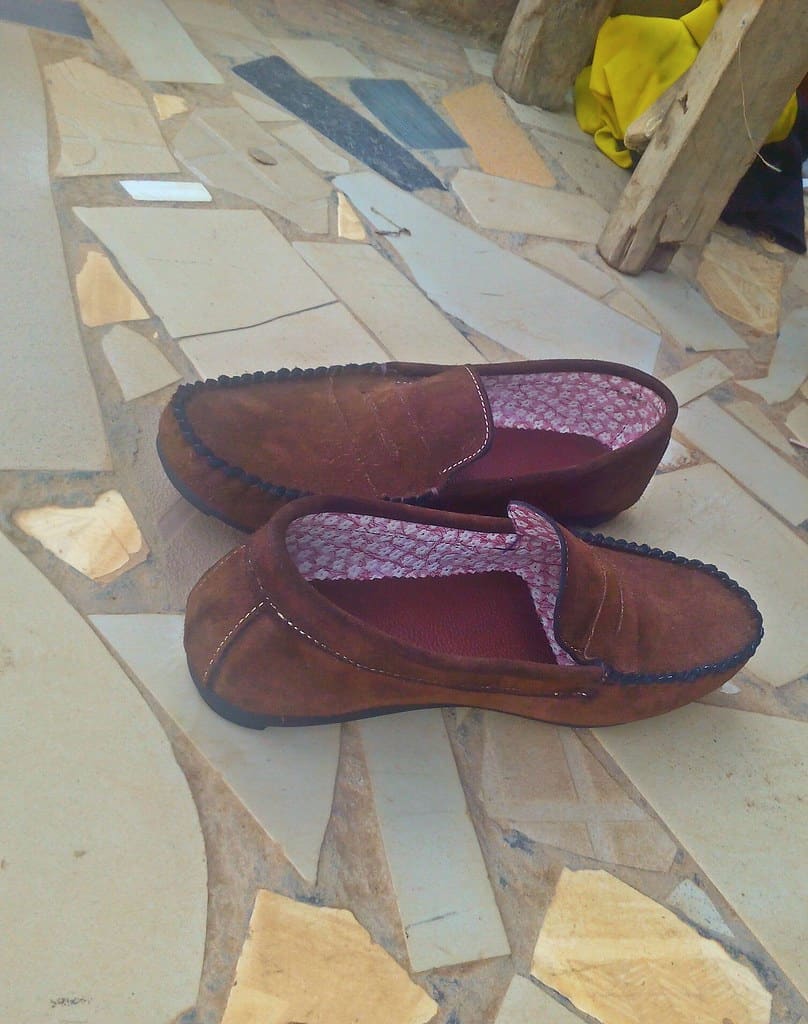
This is the band where I reach for the G.H. Bass Weejuns Larson penny loafer, at $165. It’s the classic American loafer, with a beefroll strap stitched along each side of the saddle and a leather sole, in a shape that has sat in closets for generations. It goes with chinos and odd jackets, and it looks deliberate on a lawn in a way a black oxford never will. In dark brown or burgundy, with a tan suit or a navy jacket over gray trousers, it’s exactly what a garden wedding is asking for.
Two honest drawbacks. The polished leather can crease hard at the flex point, the line across the top of the foot where it bends with each step, and after six hours of standing you’ll see it. Cedar shoe trees overnight soften the creases, but some creasing is the price of that shine. And the last runs long, so many buyers go down half a size. If you’re a US 10D in most dress shoes, try a 9.5D before you start a pile of returns, and if the numbers confuse you, why sizes drift between brands explains the lasts behind it. A loafer has no laces to cinch, so a heel that slips in the store will slip worse by the time they cut the cake.
Sand changes everything
Beach weddings are where men go wrong in both directions: a full wool suit sweating through at 2 p.m., or flip-flops and a printed shirt. The couple wrote “beach” to tell you it’s relaxed. They didn’t write “vacation.”
Start with the sand. Leather soles sink and fill. If the ceremony is actually on the beach, many couples expect guests to go barefoot for it and change into shoes for the reception on a deck or lawn. That shoe is a loafer worn with no-show socks or none, which is where the Weejuns Larson comes back in. It slips off at the edge of the sand without a fight with laces.
Above the shoe, think light. A linen or cotton suit in tan or light gray works, or, for a truly casual code, a pressed linen shirt with light wool or cotton trousers. Skip the tie unless the invitation asks for one. My notes on staying sharp in 90-degree heat cover the fabrics in more detail. Coastal air can drop from 80°F to 65°F after sunset, so pack a light jacket.
What the full set costs, starting from nothing suitable:
| Piece | Typical cost | Covers |
|---|---|---|
| Black cap-toe oxford | $425 | Black tie through formal |
| Dark brown penny loafer | $165 | Semi-formal through beach |
| Navy or charcoal suit | $500–$900 | Black tie optional through semi-formal |
| Tailoring, hem and sleeves | $40–$80 | Everything above |
| Navy odd jacket | $300–$500 | Dressy casual and beach |
Four rules for the nervous
Ask first. Couples who write an unusual wedding guest dress code generally expect questions, and most wedding websites now carry a page explaining what they mean. A short text to someone in the wedding party asking whether it’s suit and tie or something looser gets you a straight answer.
Don’t wear white or cream, or anything that photographs that way. Don’t wear all black to a daytime wedding unless the invitation says black tie; it reads as mourning.
Break in your shoes. A new pair of leather-soled dress shoes worn for the first time at an eight-hour wedding will have you limping by the speeches. Wear them around the house for an evening, then out on errands twice, starting at least two weeks before.
And keep the tie and pocket square from matching exactly. Matching sets look like they came out of one box, because they did. If you want the same shoes-first planning for other days on your calendar, there are more occasion guides in Field Guides.
The shoe is the one piece you can’t adjust once you’ve arrived, so decide it first.
The verdict: If you can own only one wedding outfit, make it a navy suit, a white shirt, a dark solid tie and the Allen Edmonds Park Avenue in black at $425. It covers black tie optional through evening semi-formal, which is most of what your mailbox will bring. Add the G.H. Bass Weejuns Larson in dark brown at $165 once the garden and beach invitations start arriving, and break both pairs in on real sidewalks starting two weeks before you need them.
In this story
How we make money: some links below are affiliate links. If you buy through them, Via may earn a commission. It never changes the price you pay, and it never decides what we recommend. Full disclosure.
Investment · $300+
Allen Edmonds Park Avenue Cap-Toe Oxford
A Goodyear-welted calfskin cap-toe oxford with a closed lacing that sits clean under suit trousers and can be recrafted by the maker when the sole is done.
Won't do: Too formal for jeans or chinos, and the leather sole is slick on wet pavement for the first few weeks.
Mid · $100–$299
G.H. Bass Weejuns Larson Penny Loafer
The classic penny loafer with a beefroll strap and leather sole; it works with chinos, odd jackets, and summer suits.
Won't do: The polished leather can crease hard at the flex point, and the last runs long enough that many buyers go down half a size.
Next stops
All Field Guides guides
What to Wear to a Funeral
A dark suit, black shoes polished the night before, and nothing anyone will remember. Plus what to do when you're short on time or don't own a suit.
Sam Whitaker 5 min
Dressing for 90-Degree Days Without Looking Sloppy
Open weaves, light colors, unlined shoes and a fit that skims instead of clings. Looking sharp in July is about fabric, not about wearing less.
Sam Whitaker 7 min

Leather Soles vs. Rubber Soles: A Commuter's Verdict
Leather looks better and breathes better, rubber grips better and lasts longer, and a $50 fix from a cobbler lets a daily commuter have most of both.
Marcus Hale 6 min