Stop 05 · Tailoring Construction
Suit Fabric Weights: Ounces, Seasons, and Wrinkles
The weight of the cloth decides when you can wear a suit, how it hangs, and whether it looks slept-in by lunch, so learn the numbers before you shop.
By Julian Okafor, Tailoring Editor
· 7 min read · 1,614 words
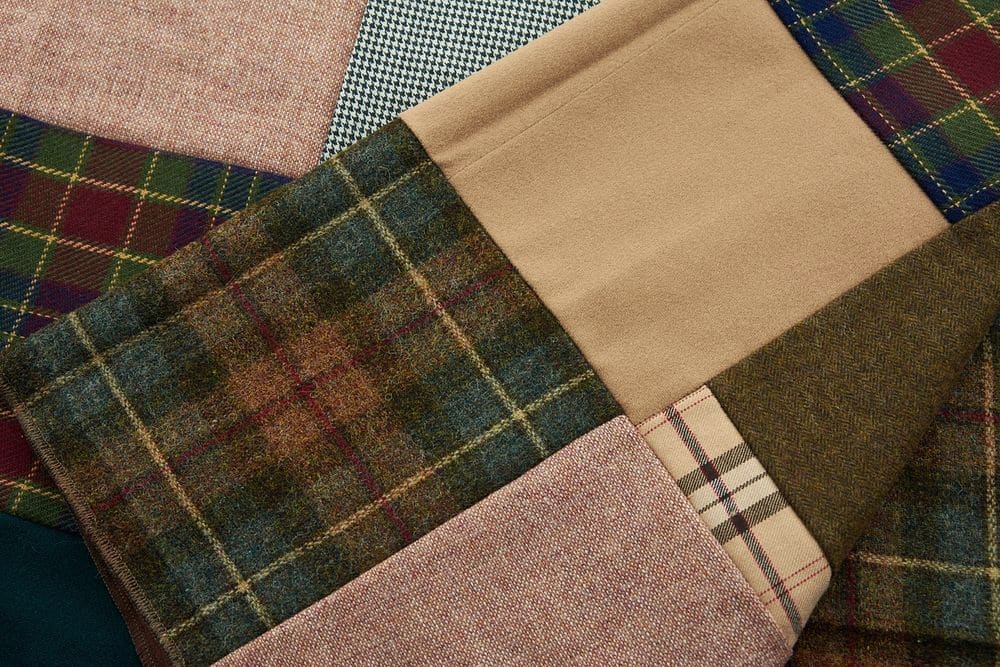
Eleven ounces. If a tailor ever handed me a card to give every man buying his only suit, that number would be on it, and very little else. It’s heavy enough to hang straight and shake off a day of sitting, light enough to survive a warm office in May, and it’s the weight that the best year-round cloths have settled on for a long time.
Suit fabric weight is measured in ounces per yard of cloth. Under 9 ounces is summer cloth that wrinkles easily, 9 to 11 ounces is the year-round range for most of the United States, and 12 ounces and up is for fall and winter, where the extra weight buys better drape and fewer creases. If you own one suit, buy it at 10 or 11.
That’s the answer. The reasons behind it are worth knowing, because the number on a swatch is only half the story, and the half nobody prints is the weave.
What the ounces actually measure
Cloth weight in the American and British trade is quoted as ounces per linear yard of cloth, usually on a bolt about 58 to 60 inches wide. A weight of 11 ounces means one yard of that bolt weighs 11 ounces. European mills quote grams per meter, and the conversion is roughly 31 grams for every ounce, so an 11-ounce cloth is about 340 grams.
What weight tells you is how much wool is in the cloth. More wool means more mass hanging from your shoulders and your waistband, and mass is what makes a trouser leg fall straight and a jacket front lie flat. It also means more insulation, though less than you’d expect, because the weave and the lining matter as much to heat as the ounces do.
What weight doesn’t tell you is quality. A Super 150s cloth isn’t heavier or lighter than a Super 110s by definition; the Super number describes how fine the individual fibers are, not how much of them there is. Very fine fibers usually get woven into light cloths, so the two tend to travel together, which is part of why expensive suits so often wrinkle. If you’re browsing swatch books for a made-to-measure suit, ask for the weight first and the Super number second.
Off the rack, the weight is rarely on the label. Ask, and if the salesman doesn’t know, judge it by hand. Hold the jacket up by the collar on one finger and let it hang; an 8-ounce jacket barely tugs, while a 13-ounce one has a noticeable pull, like holding a full grocery bag by one strap. Then squeeze a fold of trouser cloth in your fist for five seconds and let go. Light, fine cloth will hold the creases. Heavier cloth will spring most of the way back before you’ve finished looking.
Suit fabric weight by season
This is how the ranges sort out in practice, for wool suiting worn in most of the continental US.
| Weight per yard | Best season | How it handles creases |
|---|---|---|
| 7 to 8 oz | High summer only | Creases fast, recovers slowly |
| 9 to 10 oz | Spring through early fall | Moderate; hang it overnight |
| 11 to 12 oz | Year-round in most climates | Recovers on a hanger in a day |
| 13 to 14 oz | Fall and winter | Rarely creases at all |
| 15 to 16 oz | Deep winter, cold commutes | Almost never creases |
The rows overlap at the edges because climate does. A 10-ounce suit in Phoenix is a winter suit; a 12-ounce suit in Minneapolis is a spring one. If you live somewhere with real seasons and plan to own two suits eventually, your first should sit at 10 to 11 ounces. That’s the range I recommend in my case for making your first suit navy, and the two decisions go together.
Above 13 ounces you’re mostly in flannel and tweed, which are wonderful and also specific. A 14-ounce gray flannel worn under an overcoat on a 25°F morning is one of the great pleasures of tailoring, and if your mornings look like that, the cold-weather commute is where a heavy suit earns its place. In an overheated office at 2 p.m. it’s a sauna.
Weave counts as much as ounces
Two cloths at the same weight can feel completely different on a hot day, and the reason is the weave. A tight, smooth worsted twill packs its yarns close together and traps a layer of warm air against your body. An open plain weave like fresco or hopsack leaves visible gaps between the yarns, and air moves through them every time you do.
I learned this the uncomfortable way. My first summer suit was a 7 1/2-ounce tropical worsted, as light as I could find, bought for an outdoor July wedding. It was cool for about an hour. By the reception it had creased at every joint and the trousers had a permanent map of the church pew across the back. The next summer I wore a 10-ounce fresco, heavier on paper, and I was cooler in it, because the open weave breathed and the high-twist yarns sprang back after every sit.
So when a salesman tells you a suit is “lightweight,” ask two questions: what does it weigh, and how open is the weave? Hold the cloth up to a window. If you can see light through it in a fine grid, it’ll breathe. If it’s opaque and smooth, it’ll be warm whatever the ounces say. And for genuinely hot days, the weight of the suit is only one lever; dressing for 90-degree heat covers the rest of them, from shirt to shoes.
Lining is the other hidden variable. A fully lined jacket adds a layer of acetate or Bemberg across your whole back, and on a warm day that layer feels like an extra few ounces of cloth. A half-lined or quarter-lined jacket, where the lining stops at the shoulder blades, sheds heat noticeably faster. On anything under 10 ounces I’d ask for half-lining, and most makers who sell summer suits offer it.
A heavy suit that hangs right at 6 p.m. beats a light one that looked perfect at 8 a.m.
Wrinkles are mostly a weight problem
Wool recovers from creases because each fiber is a coiled spring. Bend it and it wants to return. Heavier cloth has more fiber per square inch, and more of it in each yarn, so it recovers faster and more completely. Light cloth has less to work with, and very fine light cloth (high Super numbers, under 9 ounces) creases the moment you sit and can take a full day on a hanger to relax.
That’s the trade you make with a summer suit. You get coolness and you pay for it in creases. Linen makes the trade even more starkly, wrinkling within minutes no matter its weight, and you either love that rumpled look or you don’t. I like it on a jacket, worn with odd trousers. On a full suit at a wedding it looks like you slept at the venue.
Travel tests this harder than anything. A 9-ounce tropical suit folded into a bag for a day of flights will come out looking beaten; an 11-ounce high-twist worsted, folded with care, will mostly hang out by the next morning. If you’re packing a suit in a carry-on, the weight of the cloth matters more than the folding technique. Hang it in the bathroom while you shower and the steam will do most of what an iron would.
At home, give every wool suit about 24 hours on a broad hanger between wears. That rest lets the fibers recover, and it’s free. Trousers take the worst of it, creasing behind the knees and across the lap within an hour of sitting, so hang them by the hem from a clip hanger and let their own weight pull the creases out. It works far better on 11 ounces than on 8.
Choosing the weight, in four steps
If you’re standing in a store or flipping through a swatch book, this is the order I’d work in.
- Count your suits. If this is your only one, stop at 10 to 11 ounces and ignore everything else.
- If you’re buying a second or third, pick the season it has to cover: under 9 ounces for summer heat, 13 and up for winter.
- Check the weave against a window. Open weaves run cooler than the ounces suggest; tight twills run warmer.
- Treat a Super number above 130s as a warning about wrinkles and durability, not as a mark of quality.
That last point is where I disagree with a lot of shop talk. Very fine cloth feels wonderful between your fingers, and it’s what salespeople hand you first. It also shines at the seat and the elbows sooner and creases harder. For a suit you’ll wear 20 times a year, I’d take an 11-ounce Super 110s over a 9-ounce Super 150s every time, and I’d save several hundred dollars doing it.
None of this changes what makes a suit look good, which is still the fit through the shoulders and a clean trouser hem. It changes when the suit looks good, and for how much of the day. The rest of our guides on fit and cloth pick up from there.
The verdict: Buy your first or only suit in 10- to 11-ounce wool at Super 110s to 130s, in a slightly open weave if you run hot, and hang it for 24 hours between wears. Add a 7- to 9-ounce open-weave suit for summer and a 13- to 16-ounce flannel for winter only once you own that first one.
Next stops
All Tailoring guides
Why Your First Suit Should Be Navy, Not Charcoal
Charcoal is the more serious color, but a first suit has to cover daytime weddings, interviews, and brown shoes, and navy covers more of them.
Julian Okafor 8 min
Made-to-Measure vs. Off-the-Rack: Where the Money Goes
A made-to-measure suit buys you a pattern moved to fit your body, and for most men with an average build that's money better left with a good tailor.
Julian Okafor 4 min
Packing a Week in a Carry-On, Starting With Two Pairs of Shoes
Shoes take up the most space and make the most decisions, so pick two pairs first and let the rest of the bag follow.
Sam Whitaker 5 min