Stop 01 · Footwear Wear Test
White Leather Sneakers: How They Age Over 500 Wears
Clean white leather looks perfect for about three weeks. Here's what happens to the creases, the sole, and the lining after two years of real use, and what you can slow down.
By Marcus Hale, Footwear Editor
· 5 min read · 1,201 words
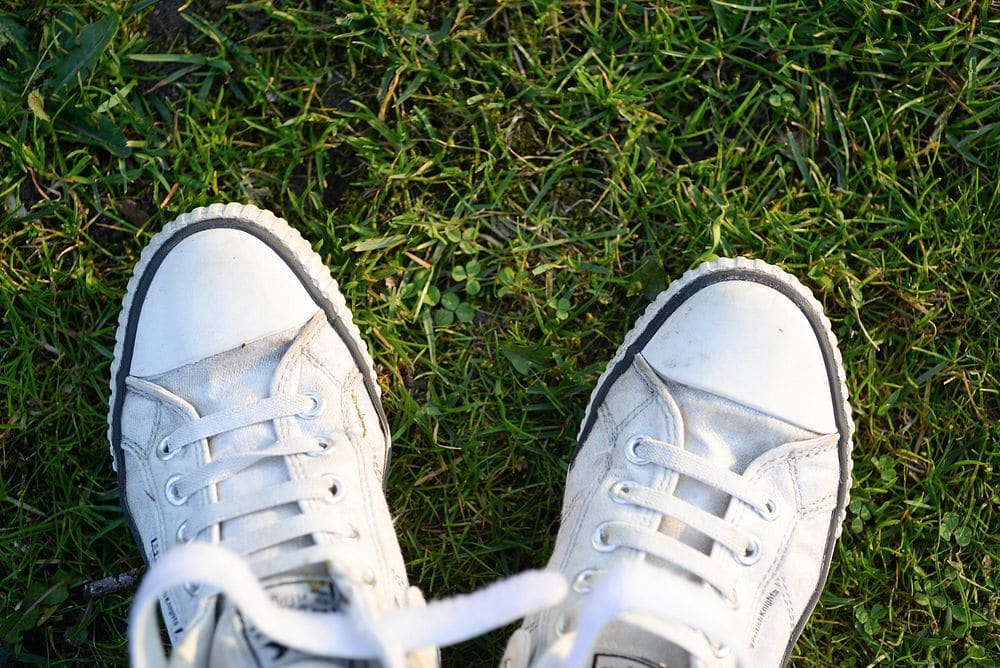
Five hundred wears is a little under three years if you put a pair on three or four days a week. That’s the life I want to walk you through, because white leather sneakers get sold on how they look in the box, and the box is the one place you’ll never wear them.
I’ve sold a lot of white sneakers and owned four pairs myself. The most common return I saw wasn’t about fit. It was a guy holding a two-month-old pair, pointing at the crease over the toes, asking if that was a defect. It isn’t. It’s the shoe doing exactly what leather does.
Short answer, before the details: white leather sneakers crease in the first month, scuff in the first season, and wear through at the outer heel somewhere between 150 and 200 wears. With a ten-minute clean every week or two and a rest day between wears, a decent pair looks good for two and a half to four years. Without that, closer to one.
The crease shows up in week three
Leather bends where your foot bends. The first time you crouch, the vamp folds across the widest part of your foot and the grain compresses. By somewhere around the 15th to 25th wear, that fold stops relaxing overnight and becomes a line. Softer, thinner leather creases sooner and finer. Stiffer, corrected-grain leather resists longer, then cracks instead of folding, which is worse.
You can’t stop it. You can make it shallower. Cedar trees go in the moment the shoes come off, while the leather is still warm and slightly damp from your foot, and they press the vamp back out. I wrote a whole piece on why cedar shoe trees are cheap insurance, and white sneakers are where you see the payoff fastest. A pair stored flat on a closet floor creases in a month what a treed pair creases in three.
Sizing matters more than people think. If there’s a lot of empty space above your toes, that loose leather collapses into a deep valley. A snug fit across the instep gives you one gentle line instead.
What 500 wears does to each part
Here’s roughly how a well-made pair with a stitched rubber cupsole changes, worn three or four days a week, cleaned every week or two, rested between wears.
| Wears | Upper | Sole | Lining |
|---|---|---|---|
| 1–25 | First toe crease sets | Tread sharp | Clean |
| 25–100 | Light scuffs at toe and heel counter | Outer heel starts to round | Heel lining darkens |
| 100–250 | Creases deepen, grain softens | Heel worn about 1/8 inch | Heel lining smooths, may fray |
| 250–500 | Leather goes slightly cream, edges dull | Outer heel nearly flat | Holes possible at heel |
The upper is rarely what kills a good pair. The lining at the heel usually goes first, especially if you jam your foot in without untying. Unlace them. I know. Do it anyway.
The heel counter, the stiff cup that holds your heel, is the other quiet casualty. Step on the back of the shoe a few times while sliding it on and the counter breaks down for good, and the shoe never grips your heel the same way again. A $3 shoehorn by the door fixes this completely. I keep one in my bag, too, which gets me some looks at airport security and zero collapsed heels.
The insole compresses as well. By wear 200 or so, a foam footbed has usually lost a third of its spring. A replacement insole costs $15 to $30 and buys back a surprising amount of comfort.
White sneakers don’t fail all at once. They get a little more lived-in every week, and you decide how fast.
The sole is the clock
On a cupsole sneaker, the rubber wraps up around the edge and is either glued or stitched to the upper. Stitching holds better over time, but almost no shoe repair shop will swap a cupsole cheaply, so for practical purposes, when the heel wears flat, the sneaker is near the end. If you walk heavy on the outside of your heel, you’ll see it first there.
This is the same trade-off I lay out in leather soles versus rubber soles. Rubber grips and shrugs off rain. It also isn’t coming back once it’s gone.
Rotation is the only real way to stretch the clock. Two pairs worn alternately last more than twice as long as one pair worn daily, because the foam and leather recover overnight. That’s a big part of why I build around a four-shoe rotation instead of one hero pair.
The pair I’d pick, and its catch
If you want the clean version that still looks right with tailoring, the Common Projects Achilles Low is what I’d buy. It’s $450, a minimal white leather sneaker on a stitched rubber cupsole, and it reads as tidy with trousers and a jacket as it does with jeans. The leather is nice, and it ages evenly.
Be clear about what that money buys. You’re paying mostly for leather and finish, not for construction you can repair, and white leather at any price shows every crease and every scuff. If you want something to beat on, this isn’t it. If you want one white sneaker that dresses up, it is. When you’re working out how to wear them with trousers, the hem is half the battle, and I’d send you to the guide on wearing sneakers with chinos.
Ten minutes a week keeps the white white
Dirt you clean the same week comes off. Dirt that sits for a month sets into the grain and the midsole, and then you’re scrubbing for an hour. My routine takes ten minutes:
- Pull the laces. Knock dried dirt off with a dry brush.
- Brush the midsole and upper with a little cleaning solution and water, working in small circles.
- Wipe with a damp microfiber cloth. Stuff with paper or put trees back in, and let them dry at room temperature, never on a radiator.
- Every month or so, give smooth leather a thin coat of neutral cream so it doesn’t dry out.
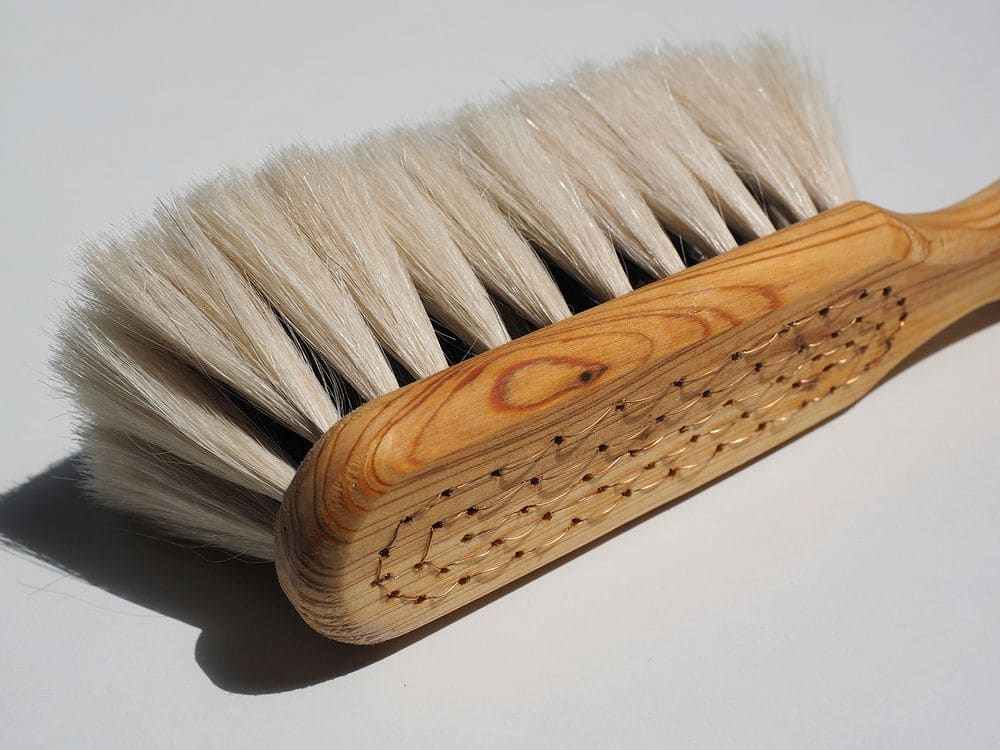
The Jason Markk Essential Kit, at $20, covers the cleaning part well: a concentrated solution and a brush that handle white midsoles, canvas, and leather uppers, and a bottle lasts months. It cleans but doesn’t condition, so smooth leather still needs a proper cream afterward. If you’re not sure which product does what, the breakdown of cream, wax, and conditioner will save you from putting wax on a sneaker.
Yellowing is the one thing cleaning won’t undo. It comes from sunlight and heat on the rubber and from old glue. Store them out of the window and away from the heater and it comes on slowly.
The verdict: Buy white leather sneakers expecting them to crease within a month and look lived-in by year two, because they will. Size them snug over the instep, tree them every night, rest them a day between wears, and clean them weekly, and a good pair like the Achilles Low lasts three years or more. Skip any of those habits and plan on replacing them in about one. More pairs worth the money are in our footwear guides.
In this story
How we make money: some links below are affiliate links. If you buy through them, Via may earn a commission. It never changes the price you pay, and it never decides what we recommend. Full disclosure.

Investment · $300+
Common Projects Achilles Low
A minimal white leather sneaker with a stitched rubber cupsole that reads clean with tailoring as easily as with denim.
Won't do: You pay mostly for leather and finish rather than construction, and white leather shows every crease and scuff.
Entry · under $100
Jason Markk Essential Kit
A concentrated cleaning solution and a hog-hair brush that handle white midsoles, canvas, and leather sneaker uppers.
Won't do: It cleans but does not condition, so smooth dress leather still needs a proper cream afterward.
Next stops
All Footwear guides
The Four-Shoe Rotation That Covers Most of a Year
An oxford, a white sneaker, a suede chukka and a penny loafer: four pairs, about $1,200, and almost nothing on the calendar they can't handle.
Marcus Hale 8 min

Leather Soles vs. Rubber Soles: A Commuter's Verdict
Leather looks better and breathes better, rubber grips better and lasts longer, and a $50 fix from a cobbler lets a daily commuter have most of both.
Marcus Hale 6 min
Cedar Shoe Trees: The Cheapest Insurance You'll Buy
Thirty dollars of unfinished cedar will add years to a pair of good shoes. Why it works, how to fit it, and where it falls short.
Walt Brennan 7 min