Stop 03 · Everyday Outfit Math
Capsule Wardrobe Math: How Few Pieces Is Too Few
Small closets fail on arithmetic, not taste. The wear rates, laundry cycles, and shoe rest days that set the real floor for a working capsule.
By Danny Reyes, Everyday Editor
· 5 min read · 1,150 words
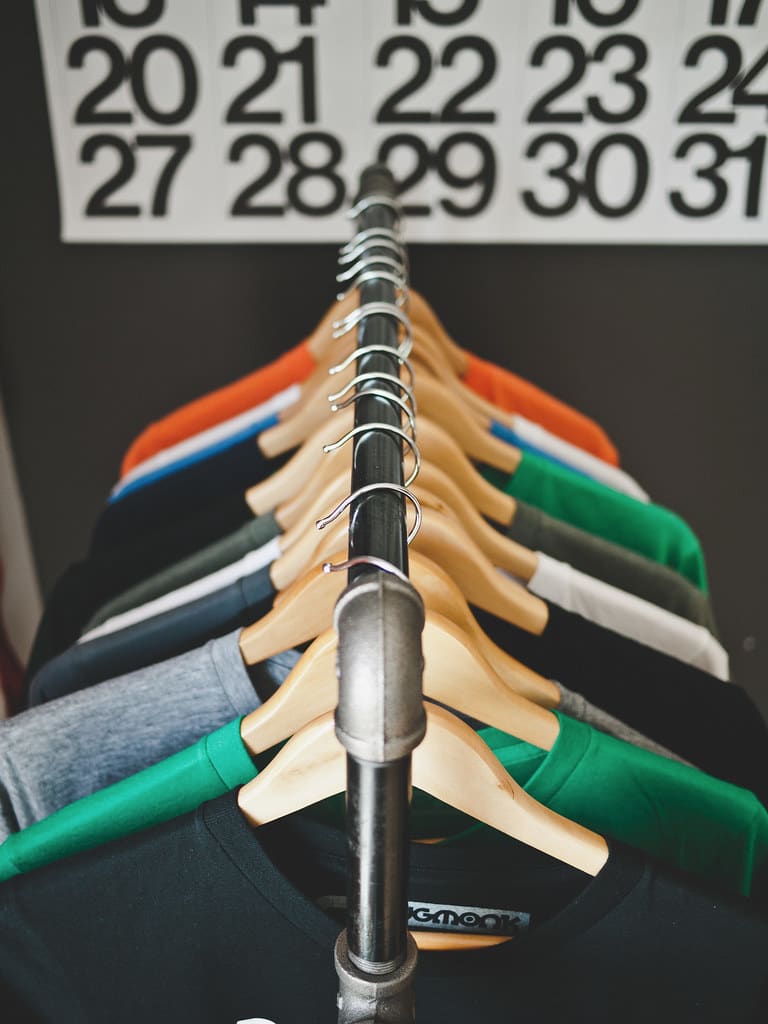
A shirt you wear twice a week is done in about eight months. That one fact sets the floor for how small a closet can get, and most minimalist advice skips it entirely.
The short answer: a men’s capsule wardrobe gets too small somewhere under about 20 pieces, shoes included. Below that, every item gets worn so often that it wears out in a year or so, laundry starts running your week, and a single stain or broken zipper leaves a hole in the system. A capsule that actually works for one season lands around 25 to 30 pieces.
I didn’t believe that until I tried the alternative. In early 2023 I cut down to 17 pieces, very pleased with myself, and by April three of my six shirts had gone at the collar at the same time.
The math starts with wear rates
Every garment has a rough number of wears in it before it looks tired. For a decent cotton tee or oxford shirt, I use about 70 washes, which matches my spreadsheet and lines up with what a mid-weight white tee will survive. If you wear one top a day and wash it after each wear, the number of tops you own decides how fast they die.
| Tops in rotation | Wears per top per year | Years before it’s done |
|---|---|---|
| 6 | 61 | About 1.1 |
| 10 | 37 | About 1.9 |
| 14 | 26 | About 2.7 |
Over five years you’ll go through roughly the same number of shirts either way, because you’re wearing a shirt every day regardless. Six tops means replacing all six every year. Fourteen means replacing a few at a time, which is cheaper on any given month and far less disruptive. The small closet doesn’t save money on shirts. It just spends it in bigger, more frequent chunks.
Bottoms run on different math. Jeans and chinos go three to five wears between washes, so a pair worn three days a week sees maybe 40 washes a year, and decent denim takes a few hundred wears before the seat thins. That’s why four or five bottoms is plenty, and why I’d never trade a top for an extra pair of pants. Socks and underwear follow the shirt math exactly, since they’re washed after every wear. I don’t count them as pieces, but I’d keep at least ten of each, or you’re doing laundry twice a week.
Over five years, six shirts and fourteen shirts cost about the same, but the six die in a year.
Shoes are where a small capsule breaks first
Start at the feet, because shoes are the slot that punishes minimalism hardest. Leather needs about 24 hours to dry out after a day of wear, longer in summer. Two pairs means each one is worn every other day with no slack for rain, and the soles and linings wear far faster than the calendar suggests.
Four pairs is my floor: a boot, a leather shoe that can go to dinner, a sneaker, and a seasonal pair (boat shoes or a second boot depending on the month). That gives each pair roughly 90 wears a year, which is what a four-shoe rotation is built around. Put cedar trees in the leather pairs on their days off; cheap shoe-tree insurance adds years to a small rotation, because every pair in it works harder.
A men’s capsule wardrobe needs about 30 pieces
This is how I’d split it for a single season in a four-season climate. It assumes a casual job and a closet that has to cover weekends, a dinner out, and bad weather.
| Category | Too few | Works |
|---|---|---|
| Shoes | 2 | 4 |
| Bottoms | 2 | 4–5 |
| Tops (tees, shirts) | 6 | 12–14 |
| Sweaters and layers | 1 | 3–4 |
| Outerwear | 1 | 2–3 |
The “works” column adds up to 25 to 30 pieces. Bottoms can be fewer than tops because jeans and chinos go several wears between washes; one pair of dark jeans carries most of my week. Tops are the biggest number because they touch your skin and get washed every time.
Outerwear is the category I’m least sure about. Where I live, I need a rain shell and a warm coat, and a canvas chore coat for the in-between weeks. If you live somewhere with one real season, two may do. Layers depend on climate too: on days that swing 30 degrees you need enough mid-layers to layer through a fall day without wearing the same sweater four days running.
Laundry is the hidden cost
The other number nobody mentions is laundry frequency. With six tops, you’re washing every five or six days, all year, or wearing something twice. With 13 or 14, a weekly load with a couple of spares covers it, including the week you get sick or travel.
There’s also what happens when something breaks. A small capsule has no redundancy. When my only pair of chinos ripped at the seat, I wore jeans to a work event I’d planned around those chinos, and I looked like it. With two pairs, that’s a nonevent.
Run your own numbers in ten minutes
You don’t need my closet. You need your wear rate. This is the check I’d run before cutting anything:
- Count the different tops you actually wore in the last 30 days.
- Divide 365 by that count to get wears per top per year.
- Divide 70 by that figure to estimate how many years each top lasts.
- If the answer is under 1.5 years, add tops before you cut anything else.
Do the same for shoes with a rough 300-wear life before a resole, and you’ll see quickly whether your rotation is too thin. Mine was. The spreadsheet made it obvious before the collars did.
Where I’d cut, and where I wouldn’t
I’m not arguing for a big closet. Most closets I’ve seen hold far too many things nobody wears, and my spreadsheet shows that about a third of what I owned in 2022 got worn fewer than five times a year. Cut those.
What I wouldn’t cut is the stuff with high wear rates: tops, socks, and shoes. Cut the single-use pieces instead: the second blazer, the novelty sneakers, the shirt you bought for one wedding. And keep the shoes and trousers compatible across the board. Every bottom should work with at least three of your four shoes, which mostly comes down to hem length; getting the hem right with sneakers covers the trickiest pairing. There’s more on building each slot in our everyday guides.
The verdict: Don’t go below about 20 pieces for a season. Aim for 25 to 30, shoes included: four pairs of shoes, four or five bottoms, 12 to 14 tops, three or four layers, and two or three outer pieces. Cut single-use items first, and spend the space you save on extra tops and a fourth pair of shoes, because those are the slots that wear out fastest.
Next stops
All Everyday guides
Layering for Fall When the Day Swings 30 Degrees
A 41-degree morning and a 71-degree afternoon need three light layers you can shed in order, starting with a boot that handles both.
Danny Reyes 6 min

Buying White T-Shirts: Fabric Weight Over Brand
The number that decides whether a white tee lasts a year or goes see-through by June is printed in ounces, and most people never look for it.
Danny Reyes 4 min
Belt Sizing: Why Your Belt Isn't Your Waist Size
A belt is measured from the buckle fold to the center hole, not around your body, and that one length is the only number worth trusting.
Theo Lindqvist 5 min